Collectors, high-value retail buyers, museums and stylists.
Live route status · Lucknow · current hubYou’re reading · Amrapali Jewels
ORGANISATION FIELD BRIEF
FIELD EDITIONAmrapali Jewels
Heritage-led fine jewellery, design archive and clienteling
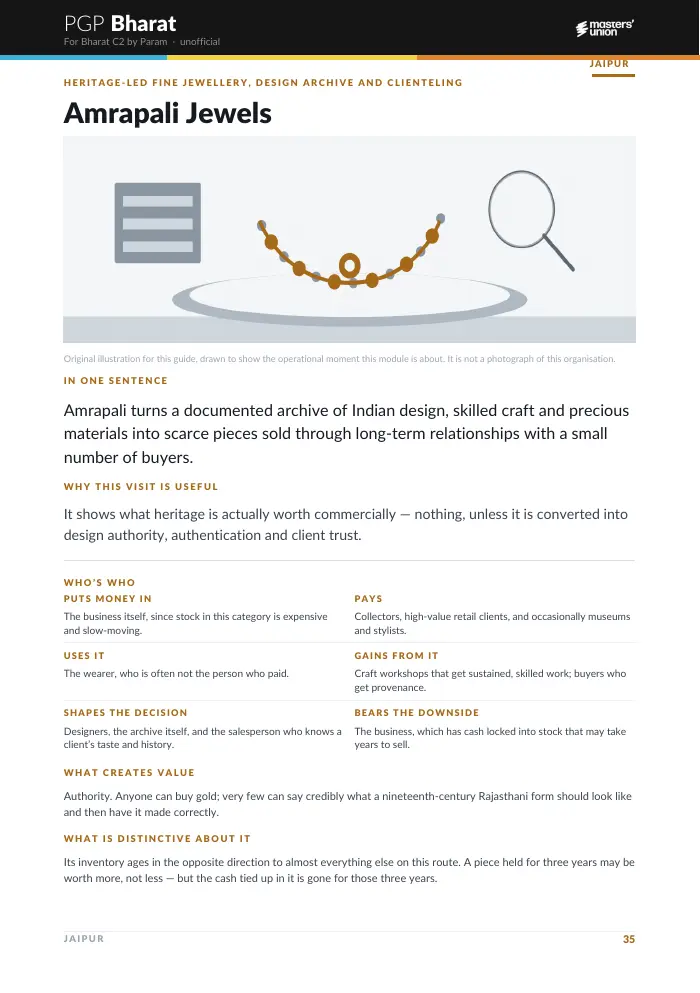
Amrapali turns a documented archive of Indian design, skilled craft and precious materials into scarce pieces sold through long-term relationships with a small number of buyers.
WHY THIS VISIT IS USEFUL
It shows that heritage is valuable only when design authority, craft quality and trust make provenance believable.
WHAT IT CANNOT ESTABLISH
The visible product cannot reveal inventory economics, client concentration or the replacement cost of materials.THE SYSTEM MODEL
Who acts, who pays and who carries the downside?
The wearer; workshops and buyers benefit from trusted provenance.
Designers, the archive and the client adviser.
The business bears material and slow-inventory risk.
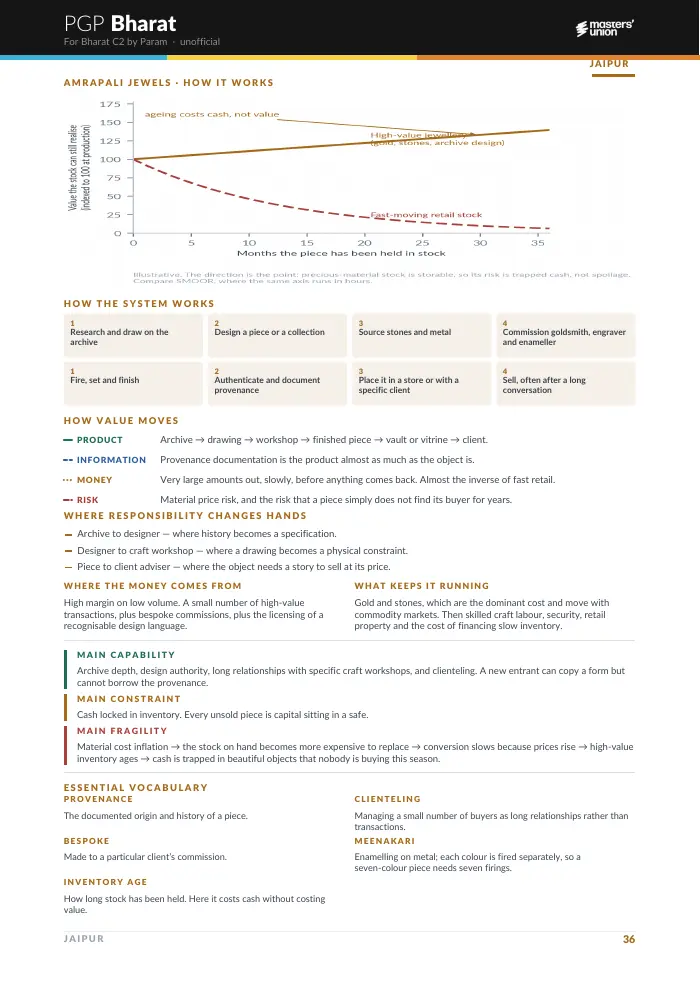
Metal and stones → specialist workshops → finishing → archive-backed retail piece.
Archival references and craft instructions move outward; provenance records return with the piece.
Materials and craft are funded long before a rare client conversion.
Material prices rise, pieces age and provenance can fail if documentation is weak.
Archive, design authority, craft relationships and patient clienteling.
Cash locked in high-value, slow-moving inventory.
Material inflation raises replacement cost → prices rise → conversion slows → inventory ages → cash remains trapped.
ON THE GROUND
Look for evidence—not presentation polish.
What to notice
- How an archival reference becomes a contemporary piece
- How craft stages and inspections are sequenced
- How sales staff manage long client relationships
Numbers that reveal the system
- Inventory age
- Conversion by client cohort
- Bespoke lead time
Critical handoffs
- Archive to designer
- Designer to specialist workshop
- Workshop to authentication
- Client adviser to buyer
THE C1 REALITY LAYER
Advice at the moment you need it.
Past-cohort precedent is separated from current C2 instructions. Anything changeable remains marked C2 VERIFY.Turn experience into evidence
Provenance needs a record, not only a story
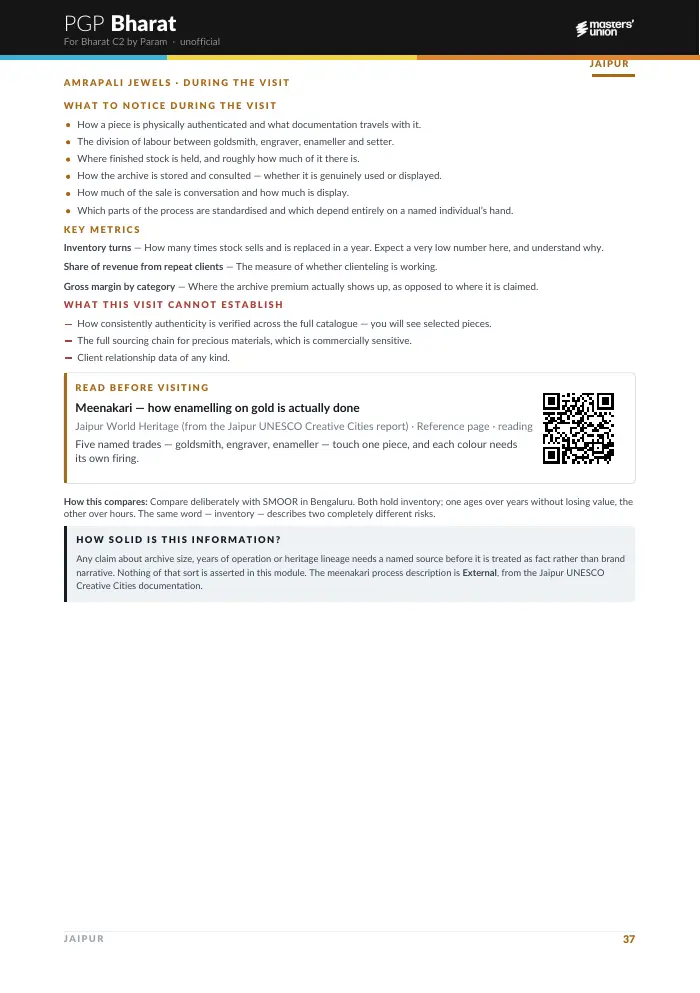
Ask how archival references, materials and maker history are documented. Compare long-dated jewellery inventory with factory stock and, later, with Darjeeling tea’s origin premium.
Field Companion and C1 archive synthesisUSEFUL WORDS
Speak the language without hiding behind it.
- Provenance
- Documented origin and history.
- Clienteling
- Long-term, individual relationship-based selling.
- Bespoke
- Made to a client’s specification.
- Meenakari
- Enamelling metal through repeated colour application and firing.
- Inventory age
- How long an item has remained unsold.
Evidence boundary
A visible piece cannot establish inventory economics, client concentration or material replacement cost. Treat claims about origin as only as strong as their documentation.
Compare with Mayukh and the tea auction: different ways of turning origin into a credible price.
WATCH / READ / EXPLORE
THE EXACT DESIGNED PAGES